Performance
Latency, caching layers, queueing, and diagnosing regressions in web/services.
This section is a small, curated knowledge base of technical notes: short explainers plus reading pointers inside the notes area. The scope is intentionally practical. The notes focus on how systems behave under real constraints (latency, load, failures), and on the tools that make behaviour easier to reason about (specifications, invariants, protocol descriptions).
Each note is written to stand alone: it starts with a quick summary and takeaways, then develops key ideas with small examples, and ends with pitfalls and related notes so you can keep a coherent map while reading.
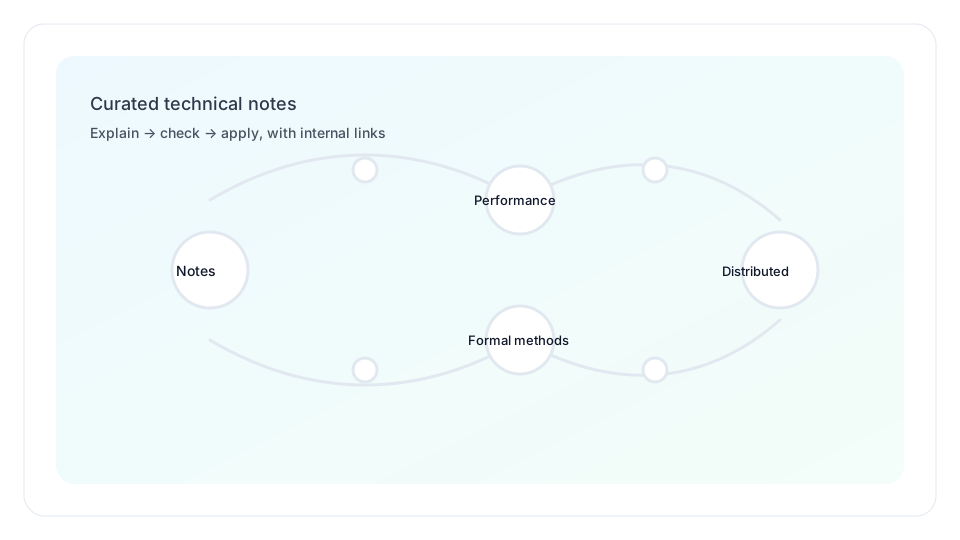
Three topic hubs; each one defines the area, offers a start path, and lists the notes.
Latency, caching layers, queueing, and diagnosing regressions in web/services.
Specifications, invariants, model checking, and protocols as tools for clarity.
Time/order, retries, idempotency, consensus, and observability for reliability.
Three short reading paths, one per topic.
Six recent notes across all topics.